
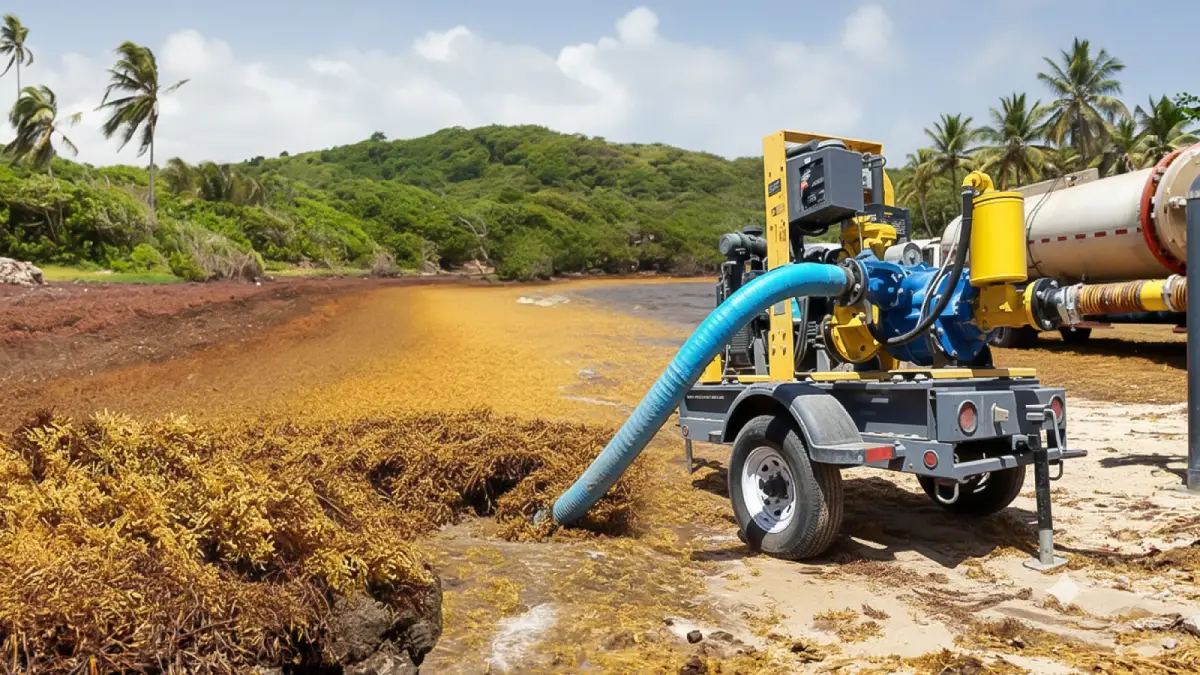
If you spend any time around Jamaica’s coastline, you don’t need an explanation of sargassum anymore. You can see it. You can smell it. And when it arrives in large amounts, you can feel the disruption almost immediately.
Beaches that are normally clear become difficult to access. The water near the shore turns dark. Visitors stop going to the sea. For hotels and beach operators, the problem is not theoretical. It shows up in complaints, cancelled activities, and extra cleanup costs. For local authorities, it becomes a pressure situation with limited time to respond.
Because Jamaica tourism relies so heavily on clean beaches, the way sargassum is handled matters. Poor or delayed sargassum removal does not just leave seaweed behind. It can damage the sand, disturb marine areas near shore, and create a cycle in which the same beach requires repeated repairs. That is where beach protection becomes part of the conversation, not an afterthought.
Over the last few seasons, it has become clear that sargassum is not a one-off issue. It requires planning, the right equipment, and a method that works with local beach conditions. This is where practical removal systems, including pump-based solutions supplied by companies like Pumps For Jamaica, are being used to manage the problem more effectively without further damaging the coastline.
Why Sargassum Keeps Showing Up on Jamaica’s Beaches
People often ask why sargassum seems worse now than it was years ago. The short answer is that the conditions have changed, and they are not going back to how they were.
Warmer ocean temperatures play a role, but so do shifting currents and stronger seasonal winds. Large mats form far out in the Atlantic and move slowly west. By the time they reach the Caribbean, they are already dense and heavy. Once they get caught in shallow bays or along curved coastlines, they stop moving. That is usually when the real problems begin.
Some parts of Jamaica are more exposed than others. Beaches with low wave action tend to trap sargassum rather than push it back out. After a few days, it starts breaking down. The smell comes first. Then the water near the shore changes colour. Even when the beach itself looks manageable, the sea often isn’t.
What makes this difficult is the timing. Sargassum rarely arrives in neat, predictable amounts. One week can be manageable. The next can overwhelm a beach that was cleaned just days earlier. This is why relying only on manual cleanup or last-minute solutions usually fails.
At this point, sargassum removal has become a planning issue rather than a reaction. Beaches that matter to Jamaica tourism need systems that can respond quickly without damaging the shoreline in the process. That is also where beach protection becomes part of the decision, not something addressed after the cleanup is already done.
What actually happens when sargassum is not dealt with
When sargassum comes in, and nothing is done quickly, things go downhill fast.
At first, it just looks messy. Then people stop walking along that part of the beach. After that, they stop going into the water. You start seeing guests standing at the edge, looking, and then turning back. That’s usually the first sign that it’s becoming a real problem.
After a few days, the smell starts. Not everywhere, but close to the waterline. The seaweed breaks down, and the water near the shore changes. Even if the rest of the beach looks fine, that stretch near the water is enough to put people off.
Cleanup becomes harder the longer it sits. Wet sargassum is heavy. When machines are brought in late, they don’t just take the seaweed. They take sand with it. Over time, the beach starts to lose its shape. Small dips form. The surface becomes uneven. That’s when beach protection stops being theoretical and turns into a repair job.
For places that depend on Jamaican tourism, this has a knock-on effect. Guests remember which beaches were usable and which ones weren’t. Resorts end up spending more money fixing the same areas again and again. None of that helps anyone.
This is why sargassum removal works best when it’s done early, using methods that don’t damage the beach while cleaning it. Once the sand is disturbed, you’re no longer just removing seaweed. You’re fixing a beach that didn’t need to be damaged in the first place.
How sargassum is usually removed, and where things go wrong
Most places start with whatever is available at the moment. That usually means people on the beach with tools, trying to clear what they can by hand. For small amounts, that works. For larger landings, it barely makes a dent.
When the volume increases, heavier equipment comes in. Loaders, tractors, trucks. The goal becomes speed. Get it off the beach before complaints pile up. But this is also where mistakes happen. Those machines are not designed for soft sand. They dig in. They scrape. Sand gets mixed in with the seaweed and is hauled away with it.
Some locations try to put barriers offshore. Sometimes they help, sometimes they don’t. If the sargassum is light and moving, barriers slow it down. If it’s heavy or already breaking apart, a lot of it slips through or sinks. Then you’re back to dealing with it at the shoreline anyway.
Mechanical skimmers are another option, but they don’t fit every beach. Shallow areas, uneven bottoms, or limited access can make them difficult to use. In some cases, getting the equipment to the site is harder than the cleanup itself.
What often gets overlooked is how these methods affect the beach after the cleanup is finished. The beach might look clear for a few days, but the sand profile has changed. The surface is looser. The slope is different. The next wave or storm does more damage than it used to.
This is where sargassum removal stops being just a cleanup task and starts affecting long-term beach protection. If the method causes more harm than the seaweed itself, the problem hasn’t really been solved.
That’s why people managing beaches tied to Jamaican tourism are starting to look more closely at how sargassum is removed, not just how quickly it can be removed.
Where Pump-Based Removal Fits In
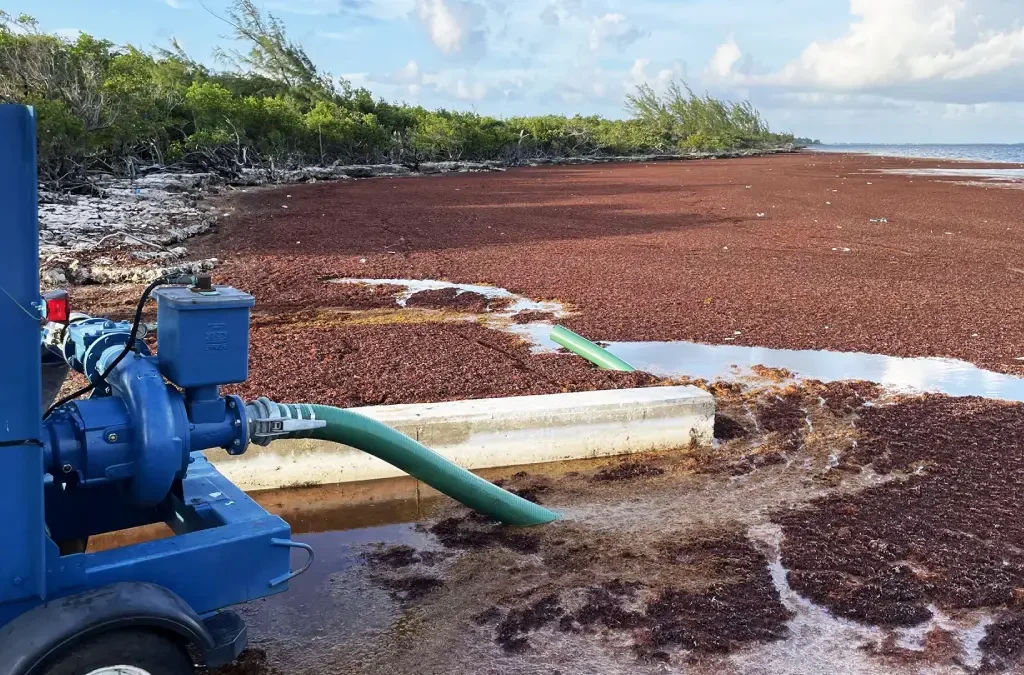
Pump-based removal usually comes into play after people realise that machines on the sand are causing more problems than they solve.
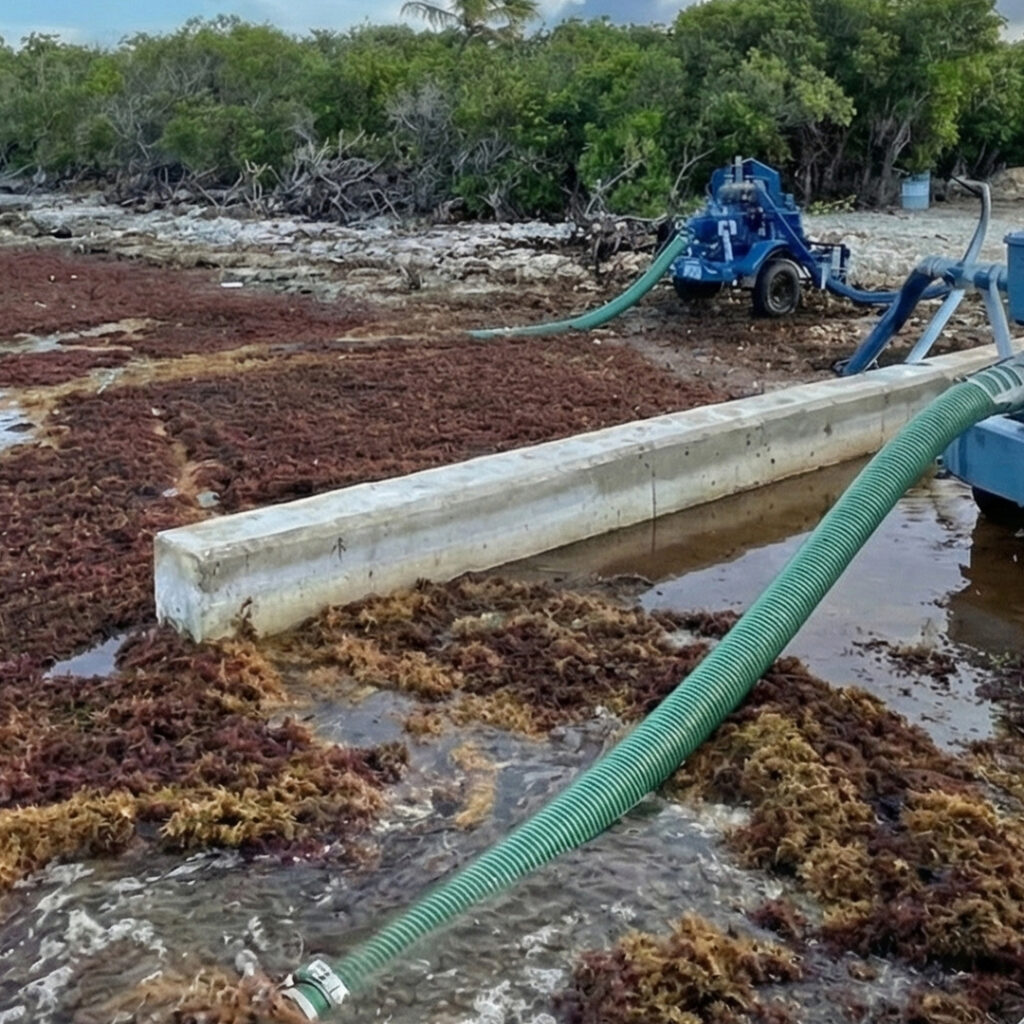
Instead of dragging equipment across the beach, pumps allow the sargassum to be moved while it is still in the water or right at the waterline. The material is pulled in with the surrounding water and sent to a controlled discharge area. That alone changes how much disturbance the beach experiences.
This approach works best in places where access is limited or where the sand needs to be protected. Shallow bays, resort beaches, and areas with regular foot traffic fall into this category. The goal is not speed at any cost. It is sargassum removal without stripping the beach every time the seaweed shows up.
Another reason pumps are being used more often is consistency. Once a setup is in place, it can be used repeatedly throughout the season. There is less improvising and less damage from rushed decisions. Over time, that makes sargassum removal more predictable instead of reactive.
In Jamaica, local conditions matter. Tides, beach slope, and access points are different from one location to another. This is where working with a local supplier makes a difference. Pumps For Jamaica supports these projects by supplying pump systems suited for coastal work and by helping operators choose setups that fit the site, not just the equipment.
From a beach protection point of view, the advantage is simple. Less digging. Less sand loss. Less repair work later. For beaches that support Jamaica tourism, that difference shows up over time, even if it is not obvious after the first cleanup.
How Pumps For Jamaica Supports Sargassum Removal on the Ground
Most sargassum projects don’t fail because of a lack of effort. They fail because the setup doesn’t match the beach.
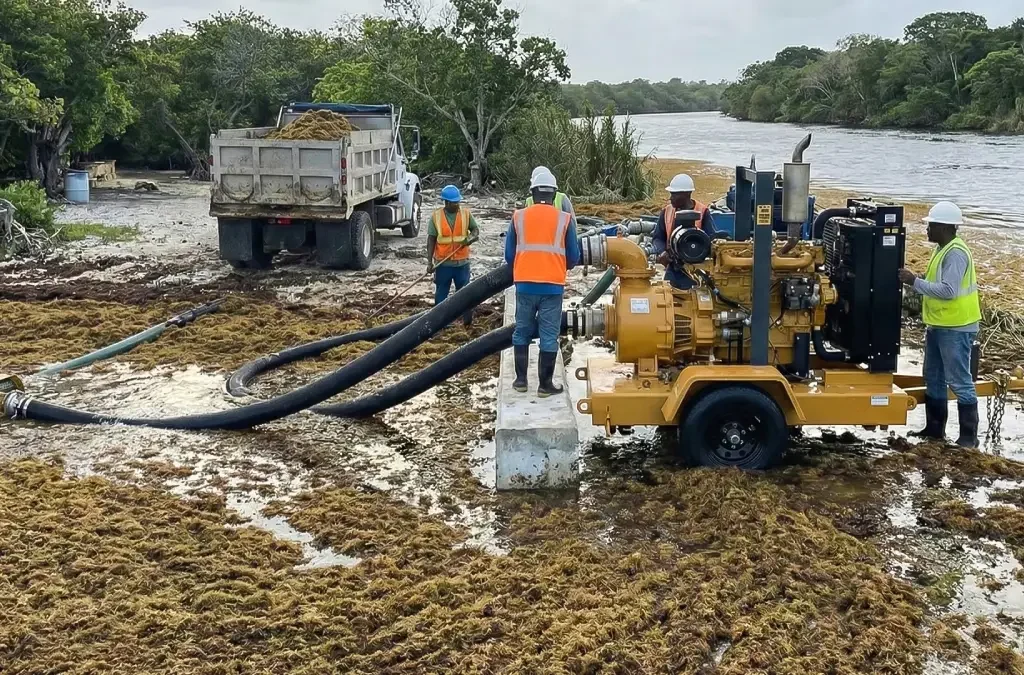
This is where Pumps For Jamaica usually gets involved. Not by pushing a single solution, but by helping people figure out what will actually work at a specific site. Beach slope, water depth, access points, and how often sargassum arrives all matter. A setup that works at one resort can be completely wrong for another just a few kilometres away.
In many cases, the first step is simply choosing the right pump for the conditions. Too small, and it clogs or runs constantly. Too large, and it pulls in more sand than necessary. The balance matters, especially when the goal is effective sargassum removal without damaging the beach.
Support doesn’t stop once the equipment arrives. Operators often need guidance on placement, intake protection, and discharge handling. Small adjustments can make a big difference over a season. Getting those details right reduces downtime and avoids repeat damage to the shoreline.
Because Pumps For Jamaica is based locally, response time is also part of the equation. When sargassum levels spike, waiting weeks for parts or replacements isn’t realistic. Having access to equipment and support on the island helps keep beaches operational during peak periods.
From a beach protection standpoint, this kind of practical support matters more than brochures or specifications. It keeps sargassum removal work steady, reduces emergency interventions, and helps beaches recover faster. In areas closely tied to Jamaica’s tourism, that reliability is often what keeps a manageable problem from turning into a season-long disruption.
Planning ahead for sargassum season
The biggest difference between beaches that cope well with sargassum and those that struggle is planning. Not complex planning. Basic, realistic planning.
Waiting until sargassum is already piling up limits every option. By that point, decisions are rushed, equipment is chosen out of urgency, and the focus shifts to clearing complaints rather than protecting the beach. That’s usually when damage happens.
Planning ahead starts with knowing when a beach is most exposed. Some areas see sargassum early in the season. Others get hit later but heavier. Looking back at previous years gives a rough pattern, even if the exact timing changes. That information alone helps decide when equipment should be ready, not ordered.
Another part that often gets missed is storage and disposal. Sargassum has to go somewhere after it’s removed. If there’s no plan, it ends up sitting too close to the shoreline or being moved repeatedly. Both create more work. Beaches that plan usually identify a temporary holding area and a clear removal schedule before the season starts.
Equipment readiness matters just as much. Pumps, hoses, and power sources need to be checked before they are needed. Waiting until the first heavy landing to test a system is a risk. Small issues turn into long delays when the pressure is already on.
From a sargassum removal perspective, planning does not mean overengineering. It means having a workable setup ready to go and people who know how to use it. That approach supports beach protection by reducing rushed interventions that strip sand or disturb the shoreline.
For locations that depend on Jamaican tourism, this kind of preparation often goes unnoticed by visitors. That’s usually a good sign. It means the beach stays usable, the water stays accessible, and the problem is managed before it becomes visible.
Costs and timelines: what cleanup really involves
Cleanup costs don’t usually spike because of the sargassum itself. They spike because the response is so late. When sargassum removal starts early, the work is simpler. When it starts late, everything becomes heavier, slower, and more expensive.
Fresh sargassum can often be moved with lighter setups and fewer hours of work. Once it sits in the water or on the sand for several days, it absorbs more water and breaks down. At that stage, removal takes longer and requires more handling. That extra time is where costs quietly build up.
Timelines are rarely fixed. A beach might look clear in the morning and be covered again two days later. This is why one-off cleanups don’t work well during peak season. Beaches that do better usually plan for repeated, shorter removal cycles instead of a single large operation. It spreads the workload and keeps conditions more stable.
Labour is another factor that gets overlooked. Even with equipment, people are still needed to monitor intakes, manage discharge areas, and address blockages. When crews are brought in only after the problem escalates, overtime and inefficiencies add to the final cost.
From a sargassum removal standpoint, the most expensive jobs are often the least controlled ones. Emergency responses, rushed equipment choices, and repeated sand repairs push budgets far beyond what a planned approach would cost.
For beaches tied closely to Jamaica tourism, the real cost is not just operational. Lost beach days, guest dissatisfaction, and repeated maintenance all carry long-term impact. Factoring those into timelines changes how cleanup work is valued and planned.
Monitoring and early warning signs
Most beaches don’t get surprised by sargassum. They just don’t act on the early signs.
Long before it reaches the shore in large amounts, there are usually small indicators. Thin strands in the water. Small patches are collecting near rocks or jetties. Changes in how the surface water moves close to shore. These things show up days earlier, but they’re easy to ignore when the beach still looks usable.
People who work near the water often notice it first. Boat operators. Lifeguards. Maintenance staff who walk the same stretch of sand every day. When they start mentioning that something looks different, that’s usually the window where action is cheapest and easiest.
Some beaches also monitor regional reports and satellite tracking, but that only helps if someone is assigned to respond. Knowing that sargassum is moving in the region doesn’t mean much if equipment is still weeks away or no one has the authority to mobilize a cleanup.
Early response changes the whole process. Smaller volumes are easier to manage. Removal can happen in shorter cycles. The beach doesn’t need heavy intervention. That quietly supports beach protection, without making the problem visible to visitors.
From a sargassum removal point of view, monitoring is less about technology and more about consistency. Someone needs to be responsible for watching conditions and making the call early. When that happens, the work stays manageable.
For areas linked to Jamaica tourism, early action often goes unnoticed by guests. That’s usually the goal. When visitors don’t notice the problem, it means the system is working.
Beach protection and why it matters for the long run
Beaches don’t fail all at once. They wear down slowly.
Each rough cleanup, each rushed decision, each season handled without a plan changes the shoreline a little. Sand is lost. The slope shifts. Recovery takes longer the next time. Over a few years, those small changes become noticeable, even if no one can point to a single cause.
This is why beach protection matters as much as removing sargassum itself. Clearing the seaweed is necessary, but how it is done determines the condition of the beach next season. A beach that holds its shape and stability is easier to maintain. One that has been repeatedly disturbed is more expensive to fix and harder to manage over time.
For Jamaica tourism, this connection is important. Visitors may not talk about erosion or cleanup methods, but they notice when a beach feels different, when access is limited, when the water looks unclear. When the shoreline no longer behaves the way it used to. Those impressions shape whether people return.
Managing sargassum removal to protect the beach helps avoid that slow decline. It allows beaches to remain usable throughout the season and to recover naturally after heavy periods. Over time, that stability supports tourism without the need for constant emergency work.
The goal is not to eliminate sargassum. That is unrealistic. The goal is to handle it in a way that keeps beaches functioning year after year. When removal methods respect the shoreline, the benefits last longer than a single cleanup.